Thermoforming Techniques and Their Relationship with Thermoplastic and Thermoset Materials
Understanding Thermoforming Techniques
Overview of Thermoforming
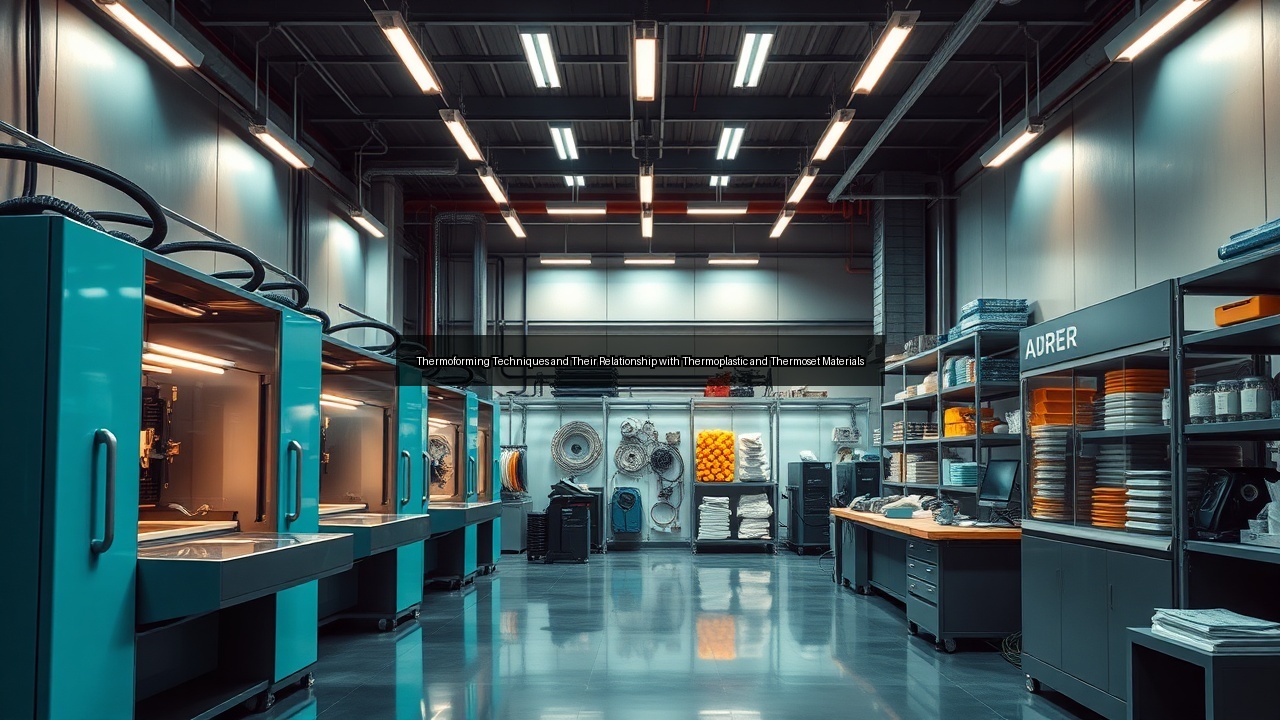
Thermoforming shapes heated plastic sheets over molds to produce precise components. Manufacturers heat thermoplastic sheets until pliable then apply vacuum or pressure to form them against tooling. The cooled part retains its contours with minimal waste. This technique works well with thermoplastics because they soften repeatedly without chemical change. Thermoset materials require careful control since heat triggers irreversible curing. Engineers select sheet thickness and mold design based on final part strength needs. Production lines achieve high throughput for consistent results across batches. Proper temperature management prevents defects like thinning or webbing during forming.
Key Processes in Thermoforming
Key processes include vacuum forming, pressure forming, and twin-sheet forming. Vacuum forming pulls the heated sheet onto the mold using atmospheric pressure for simple geometries. Pressure forming adds positive air pressure for sharper details and thicker materials. Twin-sheet forming bonds two sheets together to create hollow structures with internal ribs. Each method demands specific equipment calibration for different material behaviors. Thermoplastic polymers respond predictably to repeated heating cycles while thermosets demand single-pass processing. Operators monitor cooling rates to avoid warpage. Tooling materials range from aluminum for prototypes to steel for long runs.
Applications of Thermoforming in Industry
Industries apply thermoforming to automotive interiors, medical trays, and consumer packaging. Aerospace teams use it for lightweight cabin panels that meet strict flammability standards. Supply chain management benefits from custom dunnage trays that protect parts during transit. Design teams integrate thermoformed enclosures around electronic assemblies for quick iteration. The process supports both high-volume runs and low-cost prototypes without expensive injection molds. Material choice hinges on whether the part needs repeated reshaping or permanent heat resistance. Production managers track cycle times closely to optimize throughput and reduce scrap rates.
Thermoplastic vs Thermoset Materials
Characteristics of Thermoplastics
Thermoplastics soften when heated and harden when cooled without chemical alteration. Common examples include polyethylene, polypropylene, and polycarbonate. These materials accept reprocessing through grinding and remelting for new sheets or pellets. Their linear molecular structure allows easy flow during thermoplastic injection molding. Engineers value their impact resistance and ability to accept colorants or fillers. Recyclability makes them attractive for sustainable product lines. Processing windows remain wide, giving operators flexibility in temperature and pressure settings. Parts retain toughness even after multiple thermal cycles in service.
Characteristics of Thermosets
Thermosets undergo irreversible cross-linking when cured by heat or catalysts. Epoxy, phenolic, and polyester resins form rigid networks that resist further melting. Once set, thermoset plastics maintain dimensional stability under high temperatures. They deliver superior chemical resistance and electrical insulation compared with most thermoplastics. Curing schedules must be controlled precisely to achieve full strength. Scrap from thermoset processes cannot return to the original state, increasing material planning demands. Designers choose thermosets for components exposed to continuous heat or aggressive environments.
Comparative Analysis of Thermoplastics and Thermosets
Thermoset vs thermoplastic selection depends on service temperature, recyclability, and production volume. Thermoplastics excel in applications requiring rework or recycling while thermosets provide unmatched heat and chemical resistance. Thermoplastic vs thermoset plastics trade-offs appear clearly in aerospace brackets where weight and flame resistance matter. Processing methods also differ: thermoplastic injection molding allows fast cycles whereas thermoset compression molding needs longer cure times. Cost analysis includes raw material price, scrap rates, and end-of-life disposal. Engineers review mechanical data sheets to match polymer performance with part requirements.
Applications of Thermoplastic and Thermoset Materials
Role in Aerospace Engineering
Aerospace programs specify both thermoplastics and thermosets for interior panels, ducting, and structural brackets. Thermoplastic composites reduce weight while meeting fire-smoke-toxicity regulations. Thermoset resins form high-strength carbon-fiber parts that withstand engine bay temperatures. Supply chain teams coordinate resin shipments under strict tariff classifications to avoid delays. Design validation includes rigorous testing for fatigue and impact. Manufacturers combine thermoforming with autoclave curing to produce complex curved surfaces. Material traceability documentation supports certification requirements throughout the aircraft lifecycle.
Impact on PCB Design and Manufacturing
PCB design teams select thermoset laminates for their dimensional stability during soldering. Thermoplastic films serve as flexible substrates in wearable electronics. Thermoforming creates custom enclosures that shield sensitive circuits from vibration. Supply chain management tracks copper-clad laminate inventory to match production schedules. Thermal expansion coefficients must align between board and components to prevent cracking. Thermoset vs thermoplastic choices influence solder mask adhesion and long-term reliability. Automated optical inspection verifies trace integrity after lamination and forming steps.
Thermoforming in Supply Chain Management
Supply chain management integrates thermoformed trays and bins to protect components during shipment. Custom dunnage reduces damage claims and speeds receiving operations. Tariff classifications for plastic parts affect landed costs when sourcing across borders. Inventory planners forecast sheet material usage based on seasonal demand spikes. Reusable thermoplastic totes lower packaging waste compared with single-use options. Real-time tracking systems monitor container cycles to optimize fleet utilization. Material compatibility checks ensure trays withstand cleaning chemicals between uses.
Innovations and Future Trends
Advancements in 3D Printing with Thermoplastics
3D printing accelerates prototype development using thermoplastic filaments such as ABS and nylon. Large-format printers now produce functional fixtures that replace traditional tooling. Engineers iterate thermoforming molds quickly without waiting for machined aluminum. Material suppliers release high-temperature grades that approach thermoset performance. Post-processing steps include annealing to relieve stresses and improve surface finish. Supply chain teams source filament spools with consistent diameter tolerances for uninterrupted builds. Hybrid approaches combine printed cores with thermoformed outer skins for complex geometries.
Sustainability in Thermoset Plastics
Researchers develop recyclable thermoset plastics through dynamic covalent bonds that allow reprocessing. Chemical recycling breaks cured networks back into monomers for new resin production. Aerospace programs trial bio-based epoxies to reduce carbon footprint. Design guidelines now include end-of-life disassembly for easier material recovery. Thermoset vs thermoplastic comparisons increasingly factor lifecycle assessments. Manufacturers invest in closed-loop systems that capture scrap during plastic injection moulding. Certification bodies update standards to recognize these emerging sustainable grades.
Challenges and Opportunities in Plastic Injection Moulding
Plastic injection moulding faces challenges with warpage in large thermoplastic parts and long cure cycles in thermosets. Advanced simulation software predicts filling patterns and residual stresses before tooling cuts. Multi-material overmolding combines rigid thermoset cores with soft thermoplastic grips. Energy-efficient machines reduce operating costs while meeting throughput targets. Supply chain disruptions prompt local resin stockpiling strategies. Design for manufacturability reviews catch draft angle issues early. Automation cells integrate robotic part removal and in-line quality checks to maintain consistency.
Conclusion and Key Takeaways

Summary of Thermoforming Techniques
Thermoforming delivers efficient production of plastic parts from both thermoplastics and thermosets. Process selection depends on part geometry, material behavior, and required mechanical properties. Vacuum and pressure methods each serve distinct thickness ranges and detail levels. Aerospace and electronics sectors rely on these techniques for lightweight, durable components. Supply chain management gains efficiency through reusable formed packaging solutions. Proper material characterization prevents processing defects and ensures part performance meets specifications across temperature extremes.
Final Thoughts on Material Selection
Material selection between thermoset and thermoplastic balances performance needs against processing and sustainability goals. Thermoplastics support recycling and rapid prototyping while thermosets deliver heat resistance and chemical stability. Engineers evaluate tariff impacts and supply availability during sourcing. PCB design teams match laminate chemistry to assembly processes. Consistent documentation of material lots supports quality audits throughout manufacturing. Decision matrices help teams document trade-offs for future reference and regulatory compliance.
Future Outlook on Thermoplastic and Thermoset Technologies
Future developments will blend 3D printing with traditional thermoforming for hybrid manufacturing cells. Recyclable thermoset plastics will expand design freedom in high-temperature applications. Supply chain resilience will drive regional material production and standardized testing protocols. Plastic injection moulding will adopt greener energy sources and closed-loop resin systems. Continued innovation in thermoplastic polymers will close performance gaps with thermosets. Cross-industry collaboration will accelerate certification of new sustainable grades for critical uses in aerospace and electronics.
See Also
- Understanding the Key Differences Between Thermosets and Thermoplastics for 3D Printing
- How Tariffs Affect the Thermoset and Thermoplastic Market Landscape
- Design Innovations in Thermosets and Thermoplastics for the Future of Manufacturing
- Thermoplastics vs Thermosets The Ultimate Showdown in Material Science